One of Georgia’s first SchoolDog districts is now one of its most active users, and a model for what data-driven safety culture looks like in practice.
Carroll County Schools has spent years and millions of dollars building out its school safety program. High-definition cameras, access control, the Centegix Crisis Alert System, and 18 school resource officers across its campuses. But according to a district feature published by Carroll County Schools, the piece that’s changed how the district actually operates day to day isn’t hardware at all. It’s our web-based school safety platform called “SchoolDog” that captures what people notice, or miss, during their daily routines.
From Pilot to Districtwide Standard
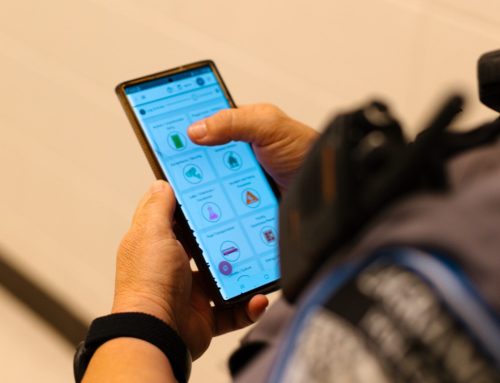
Carroll County was among the first districts in Georgia to pilot SchoolDog, starting in spring 2024. By that August, the district had rolled the platform out to every school. Administrators and SROs use the SchoolDog app to log potential vulnerabilities. Anything from an unlocked door to a mechanical issue as they walk campuses during their normal duties.
Assistant Superintendent of Support Services Glen Harding put it simply: the district needed its safety efforts to be more data-driven, and SchoolDog gave leadership visibility into both when staff were checking for safety concerns and what they were finding when they did.
Carroll County accesses SchoolDog at no direct cost through a member benefit purchased on the district’s behalf by the Georgia School Board Association Risk Management Services, which also provides the district’s workers’ compensation coverage. A model that’s helped drive adoption across other GSBA-affiliated districts in the state.
Why “Human Factor” Data Changes Behavior
Director of Student Services Tim Gribben pointed to a concrete example: keeping every exterior and interior door shut and locked during the school day, a standard Carroll County has held for years. Principals, SROs, and system leaders now log unlocked-door findings directly in SchoolDog as they walk campuses. Once a door issue shows up repeatedly across schools rather than as an isolated, anecdotal report, Gribben said, the district can respond with targeted training and real accountability instead of guesswork.
SchoolDog co-founder and CEO Buddy Costley, a Carrollton resident and Bowdon High School graduate, said the platform was purpose-built to solve this exact problem. As Costley told the district, most school systems couldn’t answer a basic question about their own safety data before adopting a tool like this:
“Ask the average school system in this nation where their safety data is, and you will get puzzled looks.”
SchoolDog closes that gap by crowdsourcing safety observations from every administrator and SRO into one shared data hub. Turning dozens of individual 20-second app entries into district-level intelligence leadership can act on in real time.
Built From the Superintendent’s Chair, Not a Vendor’s Boardroom
Costley developed SchoolDog after 11 years as a school superintendent and four years as Executive Director of the Georgia Association of Educational Leaders. The idea traces back to 2012, in the aftermath of Sandy Hook, when Costley’s own board members and parents made clear that reassurance wasn’t enough. They wanted proof that doors were actually being checked, not just a policy stating that they should be. At the time, the best available tool was a handful of generic Google checklists.
That origin is part of why SchoolDog resonates with district leaders like Harding and Gribben: it wasn’t designed by a software company looking at school safety from the outside. It was designed by someone who sat in the superintendent’s chair and needed the same proof his own community was asking for.
A Model for Data-Driven Safety Programs
Carroll County’s experience offers a useful blueprint for any district building out a state-mandated safety plan or simply trying to get more signal out of its existing safety program:
- Start small. Start with just a few laser-focus priorities…and decide to track them.
- Make it part of existing routines. SchoolDog works because it captures data during walks administrators and SROs are already doing, not a separate task layered on top.
- Look for funding partners. Districts in Georgia may be able to access SchoolDog at no direct cost through GSBA Risk Management Services, the same path Carroll County used.
As Harding noted, SchoolDog isn’t a replacement for cameras, access control, or school resource officers. It’s another tool in a growing toolbox, one that happens to target the piece every other safety investment depends on: whether people actually notice and report what’s in front of them.
See What a Districtwide Rollout Could Look Like for You
If your district is evaluating how to turn safety policy into daily practice, or simply wants more visibility into what’s actually happening on your campuses, we’d welcome the conversation.
Book a free 30-minute demo to see how SchoolDog helps districts like Carroll County build a safety culture backed by real data.
Source: “SchoolDog: School safety tool targets ‘human factor’,” Carroll County Schools, March 6, 2025.