School leaders today operate under constant pressure. Academic accountability, staffing shortages, compliance requirements, facility concerns, customer service to parents and students, and crisis response all compete for attention. When a new school safety initiative is introduced, the immediate concern is rarely about importance — it is about capacity.
The unspoken question is simple: will this reduce my workload or increase it?
The Real Reason Districts Resist New Safety Programs
Many districts have adopted safety initiatives that required extensive documentation, constant oversight, and added reporting responsibilities without creating meaningful behavioral change. Over time, leaders become cautious.
They are not resistant to improving school safety. They are resistant to adding “one more thing.” It’s called, ironically, being in survival mode as a school leader or school resource officer.
There’s no doubt about it. In order for a school safety initiative to succeed, it must solve the workload problem if you expect it to stick.
Building Capacity Instead of Adding Burden
Sustainable school safety systems distribute responsibility. Instead of centralizing oversight in one administrator, they create shared vigilance across staff members. Small, consistent observations replace heavy compliance tasks. Habit-forming actions replace overwhelming reporting requirements.
SchoolDog was designed with this psychology in mind, using a crowdsourced observation model that strengthens safety awareness across campuses without significantly increasing administrative burden.
You see, we realized that school leaders and SRO’s were already walking 15,000 steps a day doing their normal duties. Thus, we might not need them to do more walking and more formal inspections.
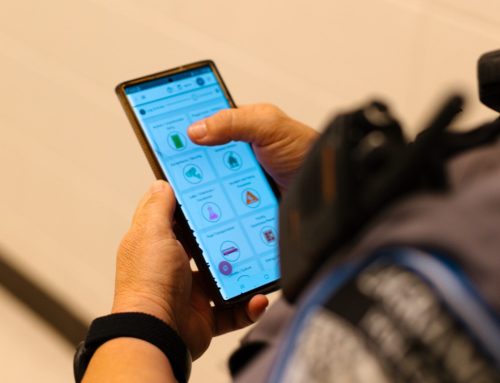
Instead, consider this: What if busy school leaders all over your school district had a simple mobile app that naturally prompted them to notice potential safety risks and best practices as they move through their campus—while doing the work they’re already doing?
When multiple adults are trained to notice vulnerabilities and strengths and then celebrated for doing so, safety becomes a shared responsibility rather than an isolated task. Through the power of the crowd, school leaders know more about the safety signals on campus, and SchoolDog packages the crowd’s shared data points into actionable insights.
This means more POWER and less VULNERABILITY for leaders bearing the load of school safety.
Why Awareness Is More Sustainable Than Compliance
Compliance-driven initiatives rely on enforcement. Awareness-driven initiatives rely on human behavior and psychology.
When staff intentionally look for safety conditions, they naturally adjust their actions. Improvement becomes organic. Capacity grows internally rather than being externally imposed.
School safety improves not because leaders add more programs, but because they increase collective awareness.